
EXCLUSIVELY FOR STOCK MARKET INVESTORS
-The One Mistake Costs More Than the Guide Ever Will
THE ULTIMATE GUIDE TO AVOID 6 KEY INVESTING MISTAKES
A simple, checklist-style PDF that shows first-time investors exactly which beginner habits quietly drain their returns — before those habits cost you thousands.
You know you should be investing!
But every time you open a brokerage app, the same fear creeps in:
"What if I get this wrong?"
Not "wrong" like picking the wrong stock. Wrong like the mistakes nobody warns you about — the ones that don't show up on a statement until years later, when it's too late to undo them.
Here's the uncomfortable truth:
Most people don't lose money in the market by being reckless. They lose it by being quietly careless — in ways that feel responsible.
A fee doesn't feel like anything today. Over 30 years, it can eat a huge chunk of your total growth.
Owning many "diversified" funds feels safer than owning 1. Often, it just means you're paying more to own the same companies twice.
Selling in a panic during a dip feels like protecting yourself. It's usually how beginners lock in losses that would have recovered.
These aren't hypothetical. They're the default path for anyone investing without a checklist to catch them.
What if you could check your own portfolio against the same six mistakes that quietly cost beginners the most — in one sitting, tonight?
That's exactly what this guide is for.
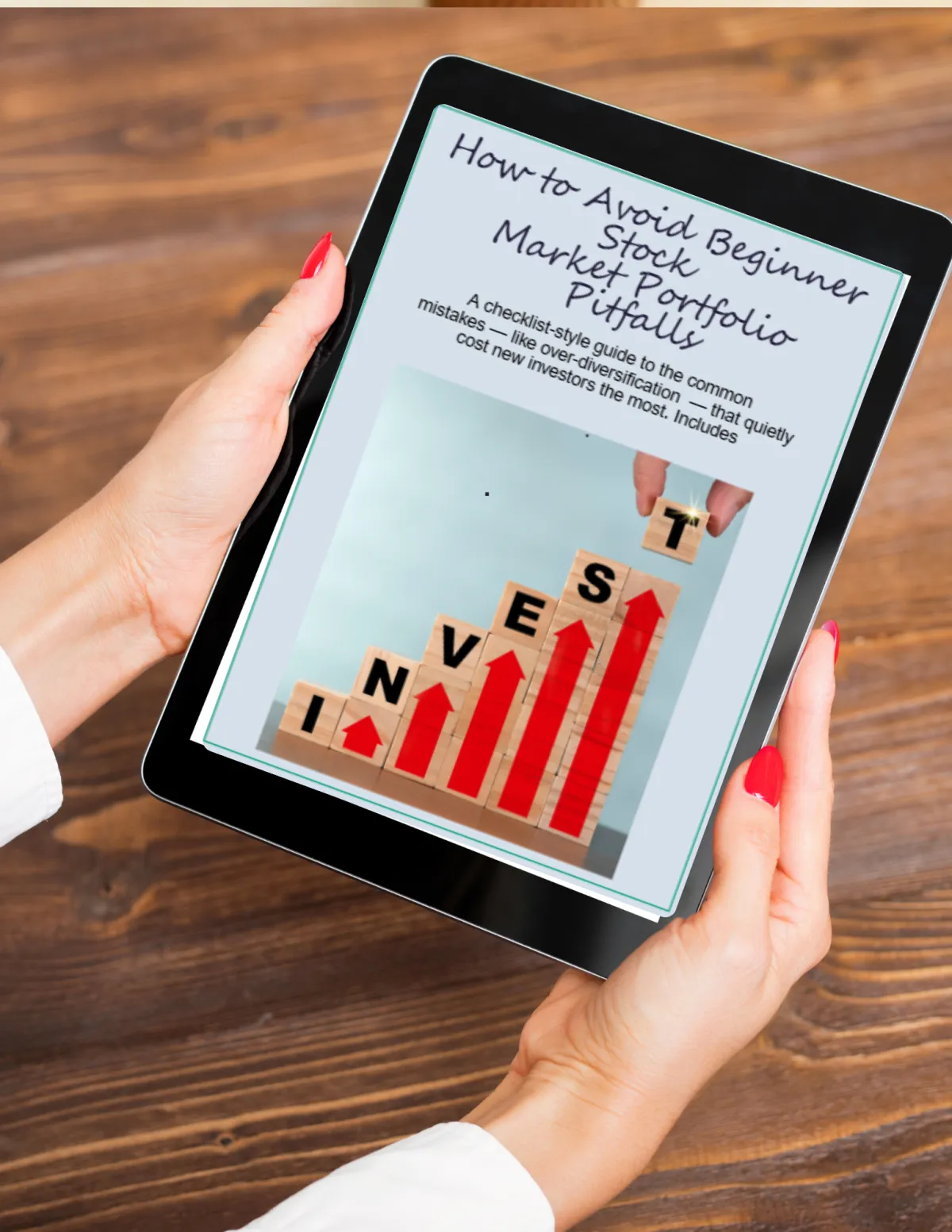
"How to Avoid Beginner Portfolio Pitfalls" is a 10-page, checklist-style PDF built for people who are new to investing and want to get the basics right — without needing a finance degree, a financial advisor on retainer, or hours of research
.
No jargon.
No stock picks, just guidance to avoid costly mistakes!
No hype.
Just the six mistakes that trip up almost every beginner, explained simply, with a plain checklist next to each one so you can check your own accounts as you read.
What's Inside
✅ The 6 most expensive mistakes — explained in plain English, with real examples of how they quietly cost money
✅ A "why it happens" breakdown for each mistake, so you understand the trap, not just the rule
✅ A tick-box checklist per chapter — go through your own portfolio and catch issues in real time
✅ A condensed master checklist at the end, so you can re-check yourself in 5 minutes any time
✅ Covers over-diversification, hidden fees, & performance-chasing,
✅ Designed to be read once and used forever — not another 40-page ebook that sits in your downloads folder.
Who This Is For
You've started investing (or are about to) and want to make sure you're not making a costly beginner error
You feel behind, overwhelmed, or unsure whether what you're doing is "right"
You don't want to pay for a financial advisor just to sanity-check the basics
You'd rather spend 20 minutes reading a checklist than years wondering if you're leaving money on the table
Who This Is Not For
Experienced investors looking for advanced strategy or stock-picking tips
Anyone looking for tax or legal advice specific to their situation (this guide points you to the right questions to ask a professional — it isn't a replacement for one)
Everything above for less than the cost of a takeaway coffee run.
£19Today: £9.99(Instant PDF download — read on any phone, tablet, or computer in
What This Guide Does
This isn't a guide telling you what to buy. It's a guide telling you what to check — the difference between gambling on tips and building a habit that protects you no matter what the market does next.
"The goal isn't to make perfect decisions. It's to stop making the same avoidable ones."
Every month you invest without checking for these six mistakes is a month they can quietly keep costing you.
👉 Get Instant Access for £9.99
FAQ's
"I'm a total beginner — is this too advanced for me?"
No — it's written specifically for beginners. No jargon, no assumed knowledge.
"Does this tell me what to invest in?"
No. It won't recommend stocks or funds. It shows you the mistakes to avoid whatever you're invested in.
"Is this financial advice?"
No. It's educational content designed to help you ask better questions and spot common errors. It isn't personalised financial, tax, or legal advice, and it's not a substitute for speaking to a qualified professional about your specific situation.
"What format is it?"
A 10-page PDF, delivered instantly after purchase. Read it on your phone, tablet, or computer.
Disclaimer
This guide is for educational purposes only and does not constitute financial, tax, or legal advice. Investing involves risk, including the potential loss of principal. Please consult a qualified financial advisor before making investment decisions.